
Case Study 2:
Speedy Readers ePUBs
About
Speedy Readers is a digital-only, CEFR-aligned series of short readers tailored for secondary+ learners. It was designed to breathe new life into secondary+ language learning by trading traditional, dense text for a high-energy, social-media-inspired experience. The project spanned from November 2023 to January 2025 and covers both fiction and non-fiction contemporary titles. The core product is a mobile-first, responsive experience designed to mirror the engagement patterns of modern social media.
The Problem
Traditional long-form readers are often a "tough sell" for secondary learners, who frequently demonstrate low motivation when faced with conventional formats.
Task
The task was to establish a high-impact "look and feel" designed to drive learner engagement while ensuring the design was sufficiently adaptable and scalable to meet an ambitious production roadmap of 30 titles every three months. I was responsible for developing a cohesive visual language and brand system that prioritized accessibility and clarity through visual hierarchy, purposeful color emphasis, and the application of Gestalt principles.
Design process
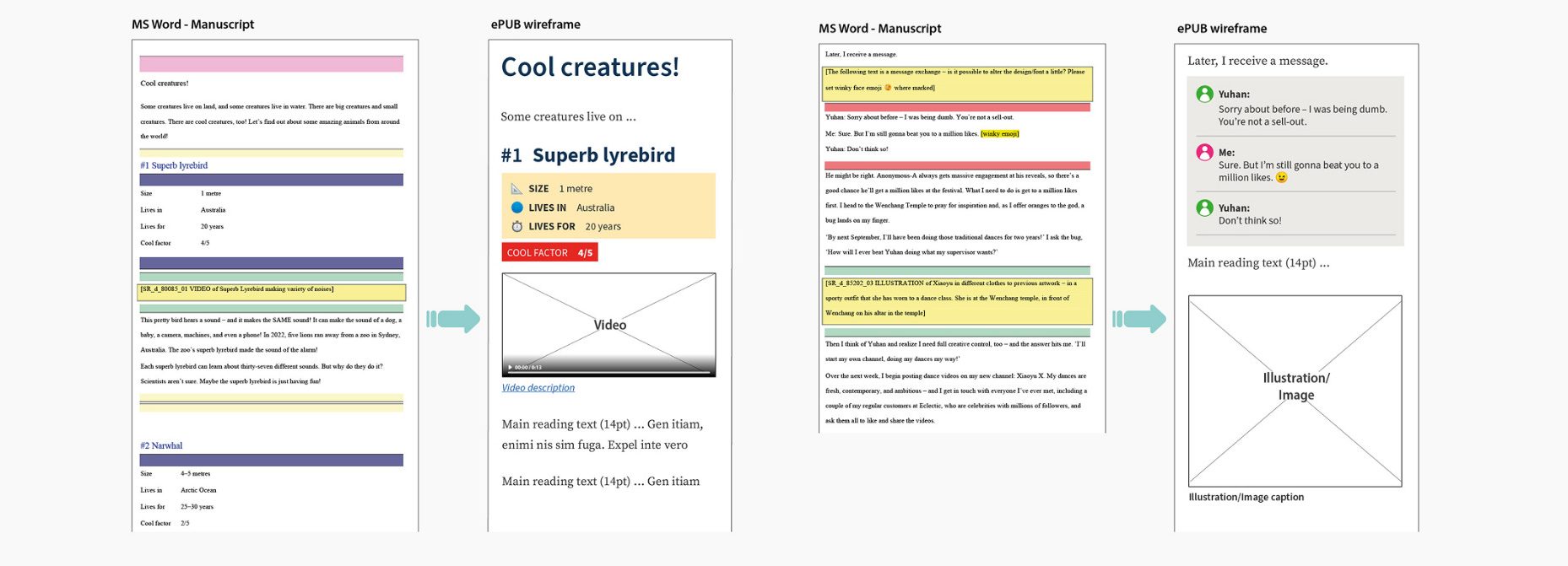
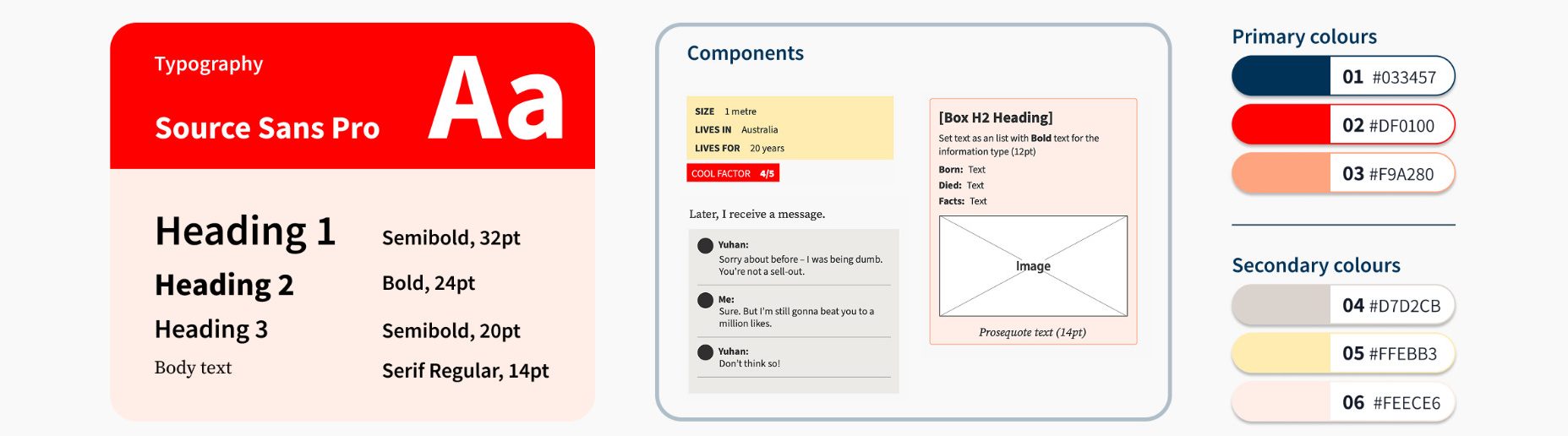
The transition from manuscript to reflowable ePUBs focused on identifying and organising text into specific "content types," which were then styled through wireframe mockups and high-fidelity prototypes. These prototypes established the foundation for colours, spacing, typography, and reusable components, serving as a visual North Star for the asset specifications and CSS development. By defining these elements early, the workflow became significantly more streamlined, allowing the project to scale with greater consistency and efficiency.
Design considerations
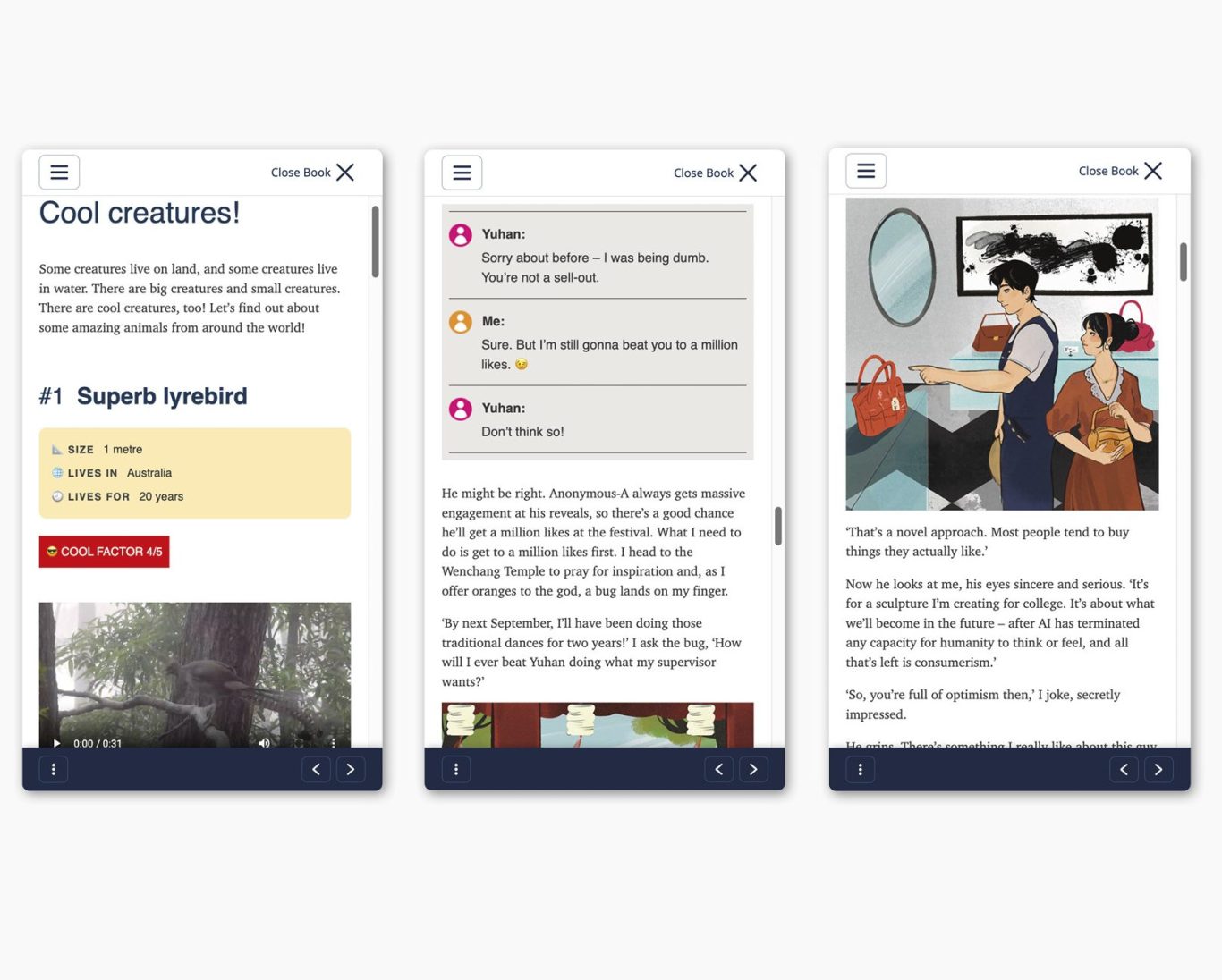
- Fiction & non-fiction for broad appeal
- Accessibility: Inclusive readability through colour and layout
- Readability tuned for mobile-first comfort
- Consistent UI components for scalability
Design system
Landing page/ePUB covers
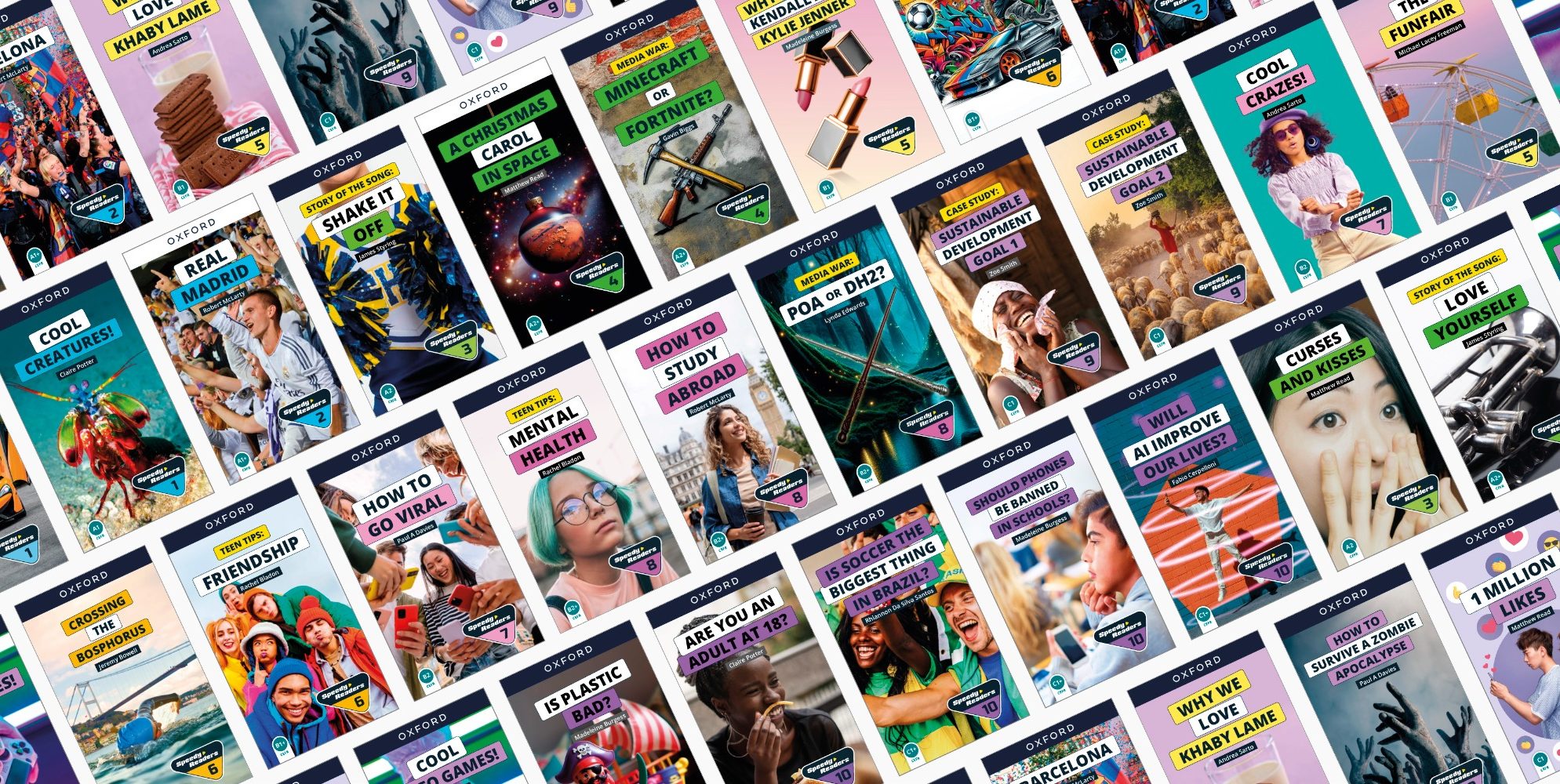
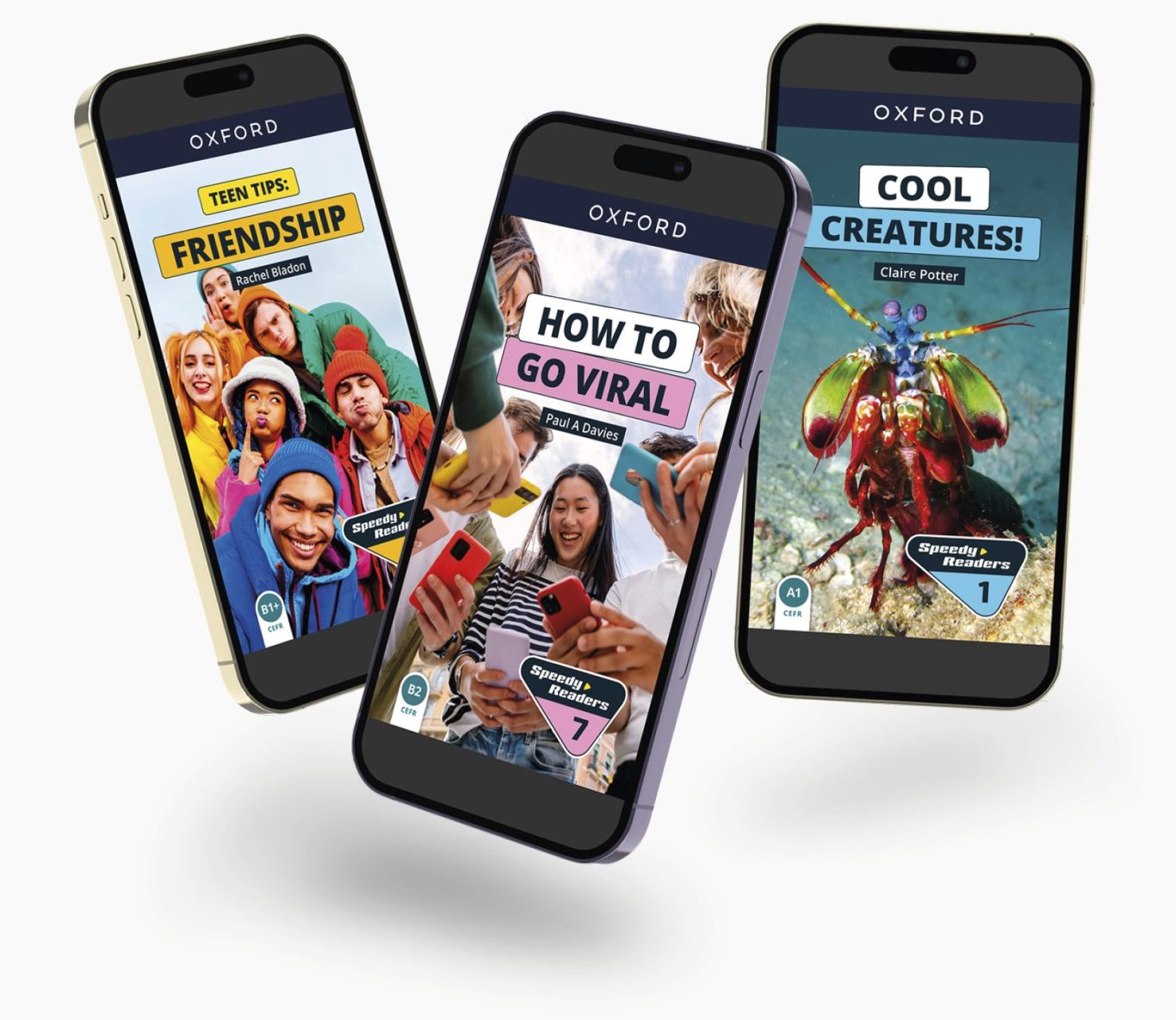
The "Landing page" experience is defined by the ebook covers. These were designed to look like YouTube "vlogging" thumbnails, featuring bold titles, vibrant imagery, and clear CEFR level indicators (A1 to C1) to attract the secondary+ demographic.
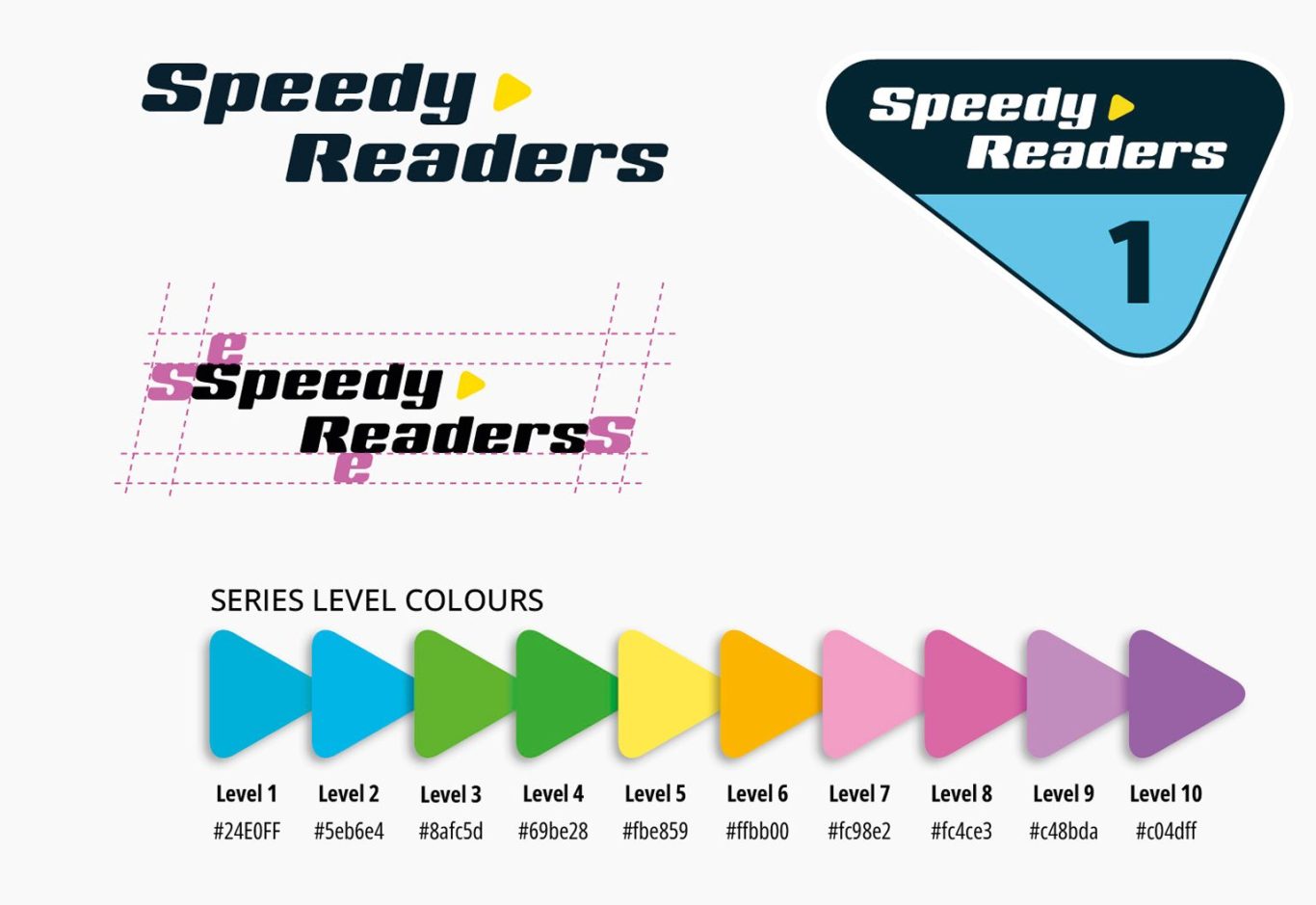
Series Brand
The Speedy Readers series brand centres on racing and video-play cues to symbolise forward motion and quick starts.
Level system:
- The 10 graded levels are represented by a play-button-inspired device
- Distinct neon colours for rapid recognition and motivation
Marketing
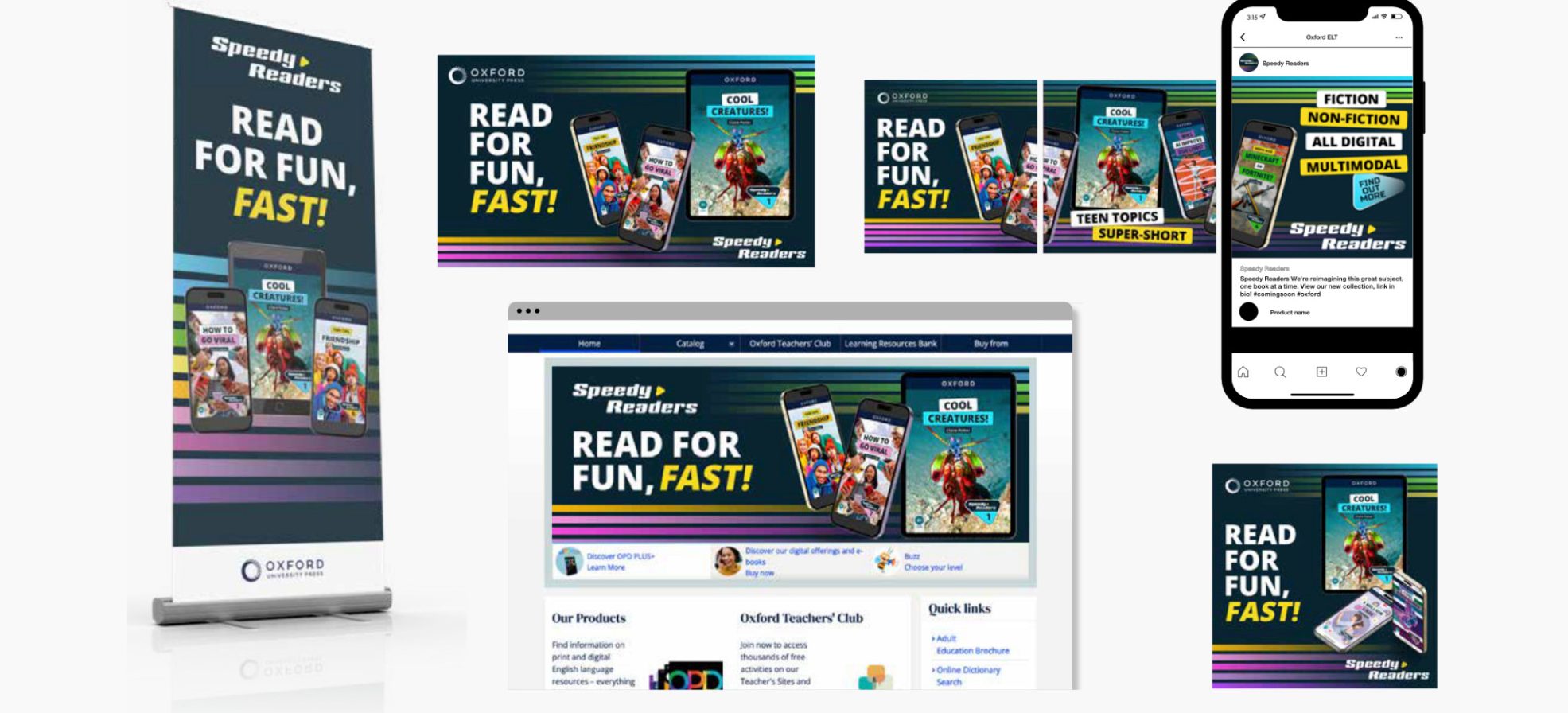
To support the launch of Speedy Readers, a comprehensive suite of go-to-market assets were created. Mirroring the brand's digital-first, social-media-inspired aesthetic, these included website hero banners and targeted assets for X and Facebook. The campaign also featured mobile-optimized multi-screen banners to ensure a seamless responsive experience. Beyond digital, the toolkit extended to print, incorporating ads and pull-up banners alongside posters and brochures to maintain brand consistency across physical touchpoints. These materials effectively leverage vibrant "speed stripes" and the neon level colours to drive learner engagement.
Key Takeaways
Impact
- Positive market response, with requests for new topics
- Students report that short stories and quick progression boost motivation
What I learnt
- Digital-first design resonates with learners and markets
- Short-form content accelerates perceived progress
- Reusable design system speeds production
Next steps
1
Expand topics based on market input
In response to positive market feedback and specific requests for new titles , the plan is to broaden the library to include a wider range of contemporary fiction and non-fiction topics.
2
Enrich interactive moments
We aim to deepen learner engagement by introducing more sophisticated interactive features that further mirror the functionality of modern social media platforms.
3
Continue accessibility refinements
Building on our commitment to inclusive design , we will continue to optimise colour contrast, layout hierarchy, and mobile-first readability to ensure the content is accessible to all learners.