
Case Study 3:
Backlist Readers ePUBs
My role: Lead UX/UI Designer developing the design system, prototypes, accessibility, and clarity (hierarchy, colour emphasis, Gestalt principles).
Where: Oxford University Press
Project duration: 15 months
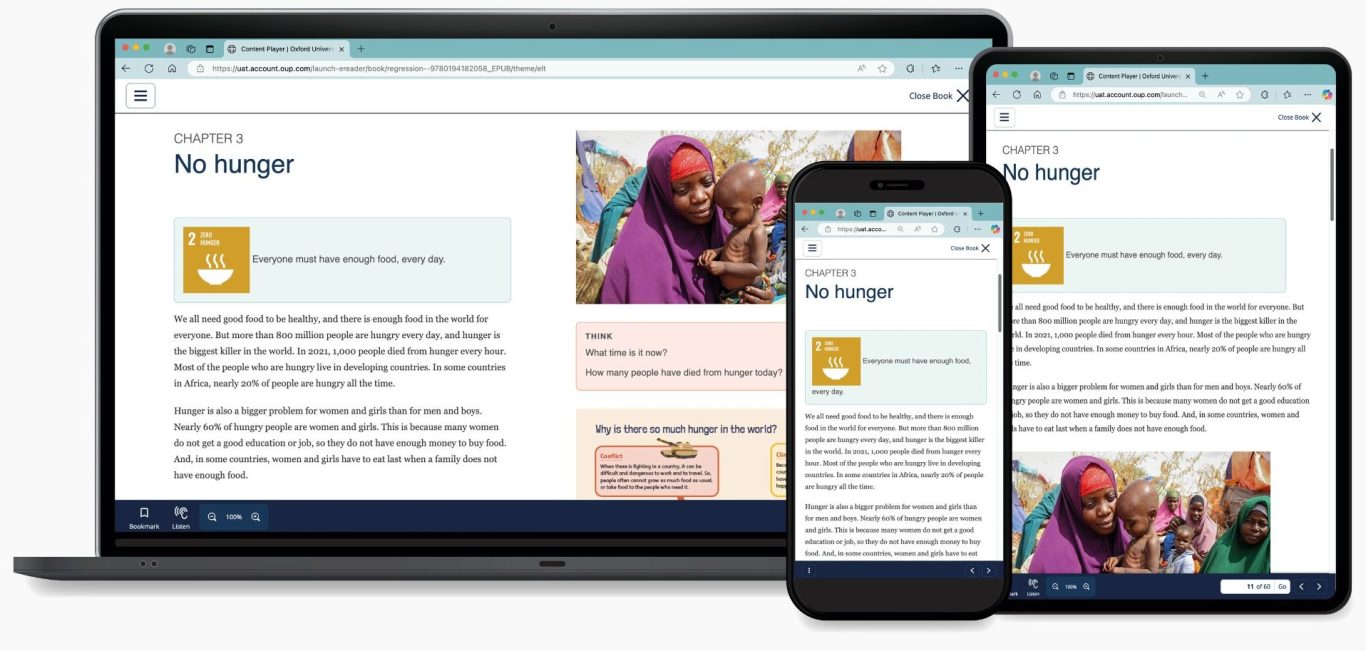
Challenge: Converting +500 Readers titles that were designed for print. Adapting and optimising the assets and content at scale.
Solution: To create a library of reflowable ePUBs that are accessible, platform agnostic, and meet the ePUB3 open standard format.
Design process
Phase 1: Multi-Disciplinary Co-Creation & Strategy
I contributed to co-creation sessions as part of a cross-functional team involving Content Transformation, developers, and editorial teams to define project parameters for 500+ backlist titles. Collaborated on the strategic selection of content for conversion, ensuring the transition from print to digital was prioritised based on customer demand and sales data.
Phase 2: Information Architecture & Extraction
Moving from strategy to execution, I led the effort to deconstruct the legacy print materials. The content of each reader was categorised by pedagogical type and styled, ensuring that the digital hierarchy remained intuitive for learners while meeting technical requirements for reflowable content.
Phase 3: Visual Logic & Technical Governance
To bridge the gap between design and production, I developed a series of wireframes and instructional prototypes. These served as a "visual blueprint" within the project documentation, providing clear guidance for both internal stakeholders and external developers.
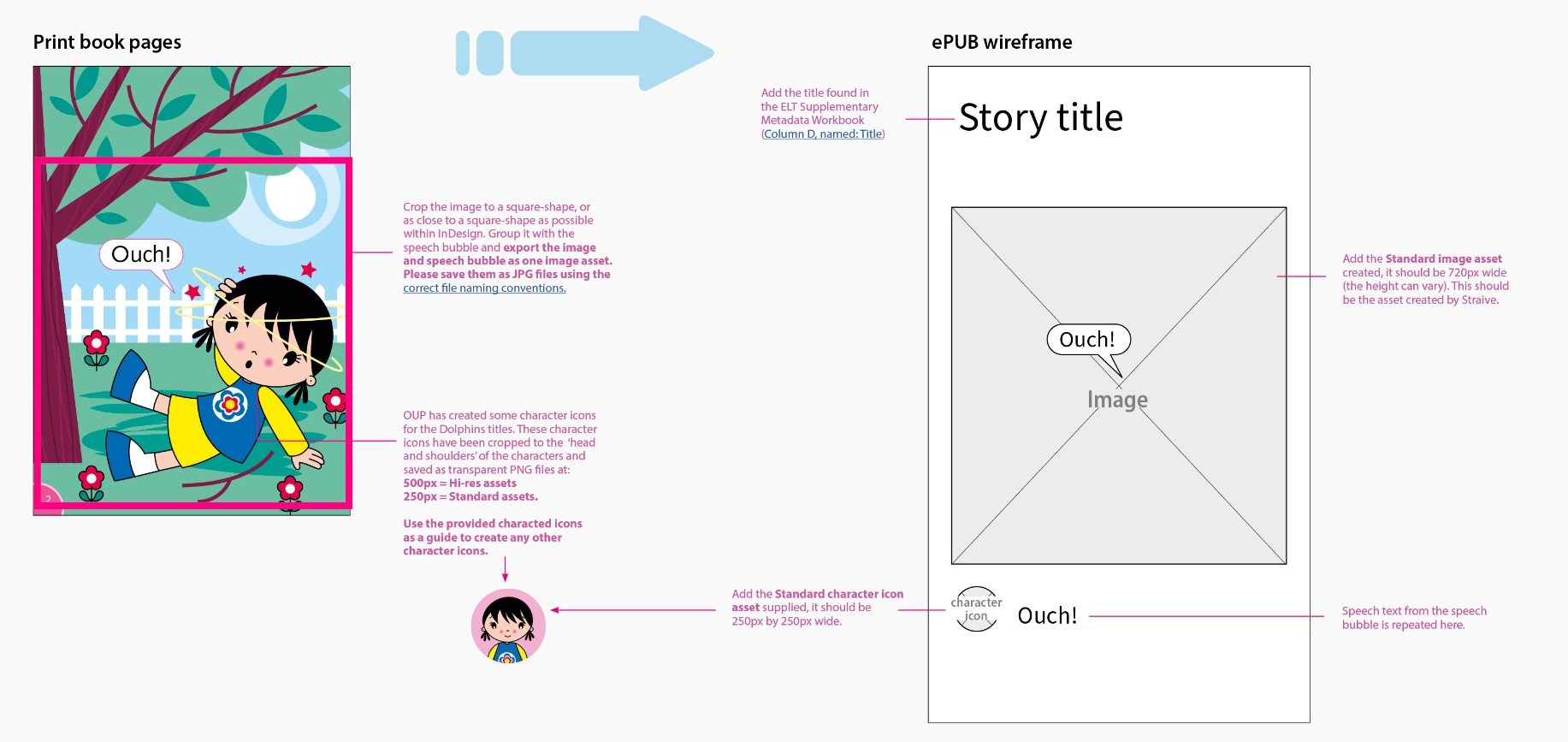
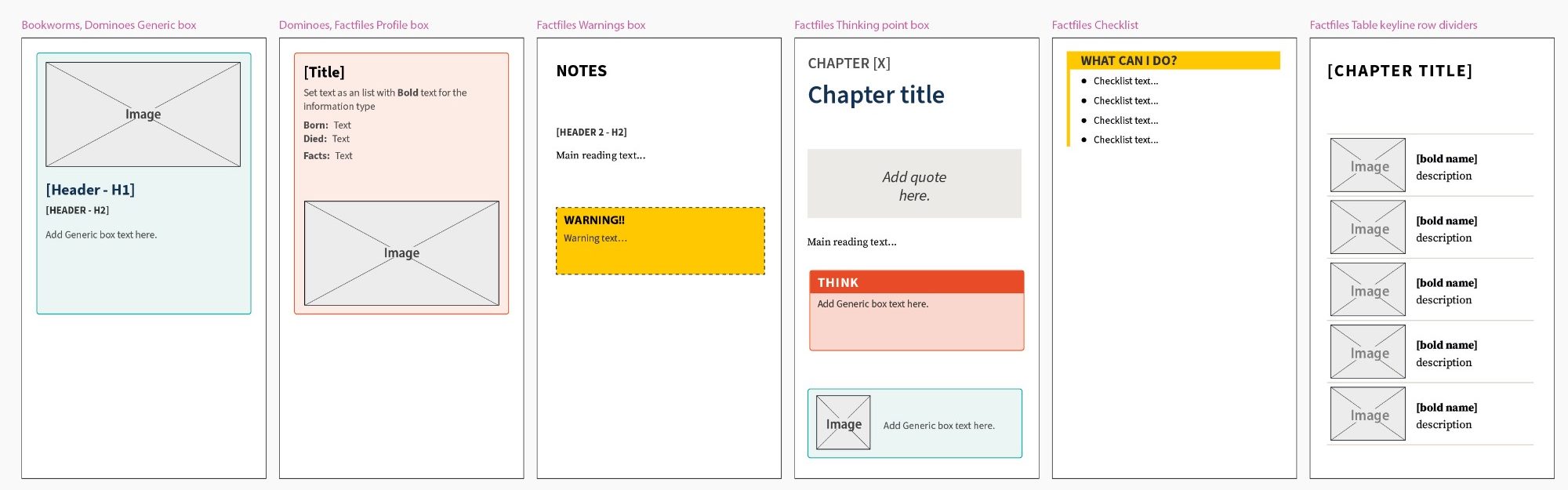
Phase 4: Impact on UX and Production Efficiency
The collaborative approach and detailed instructional prototypes directly improved the quality and speed of production. By aligning all stakeholders early in a co-creation environment, we ensured that the final assets were not only "pixel-perfect" but also optimised for user engagement across various digital reading devices.
Key Takeaways
Impact
The ePUBs are optimised for mobile and tablet use, allowing teachers to set extra reading for homework. Students and teachers can monitor reading progress and adjust the Reader settings to improve accessibility.
What I learnt
The Primary ePUBs will require further research and development to establish a workable solution that allows the portrait‑oriented artwork and the accompanying text to be displayed on screen simultaneously.